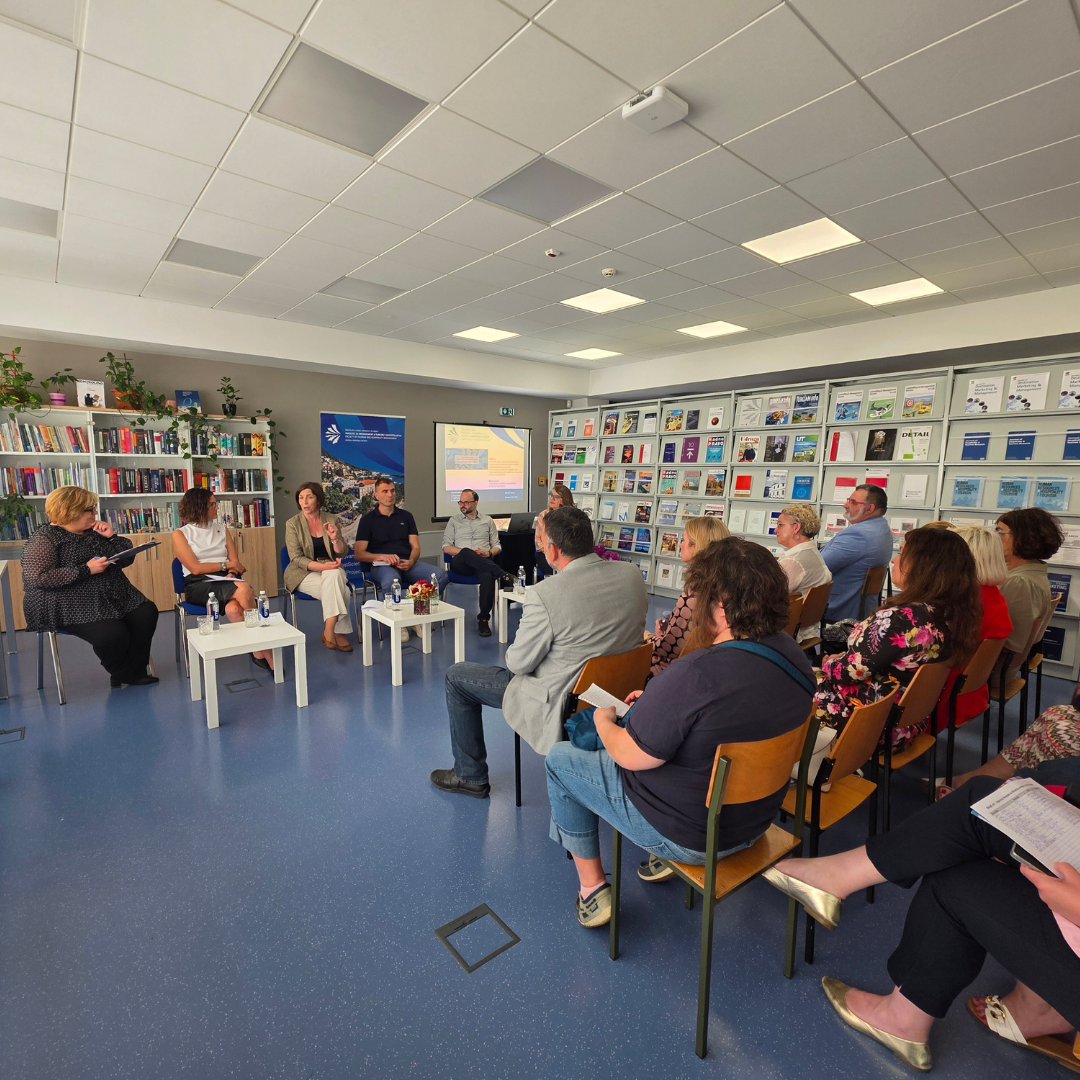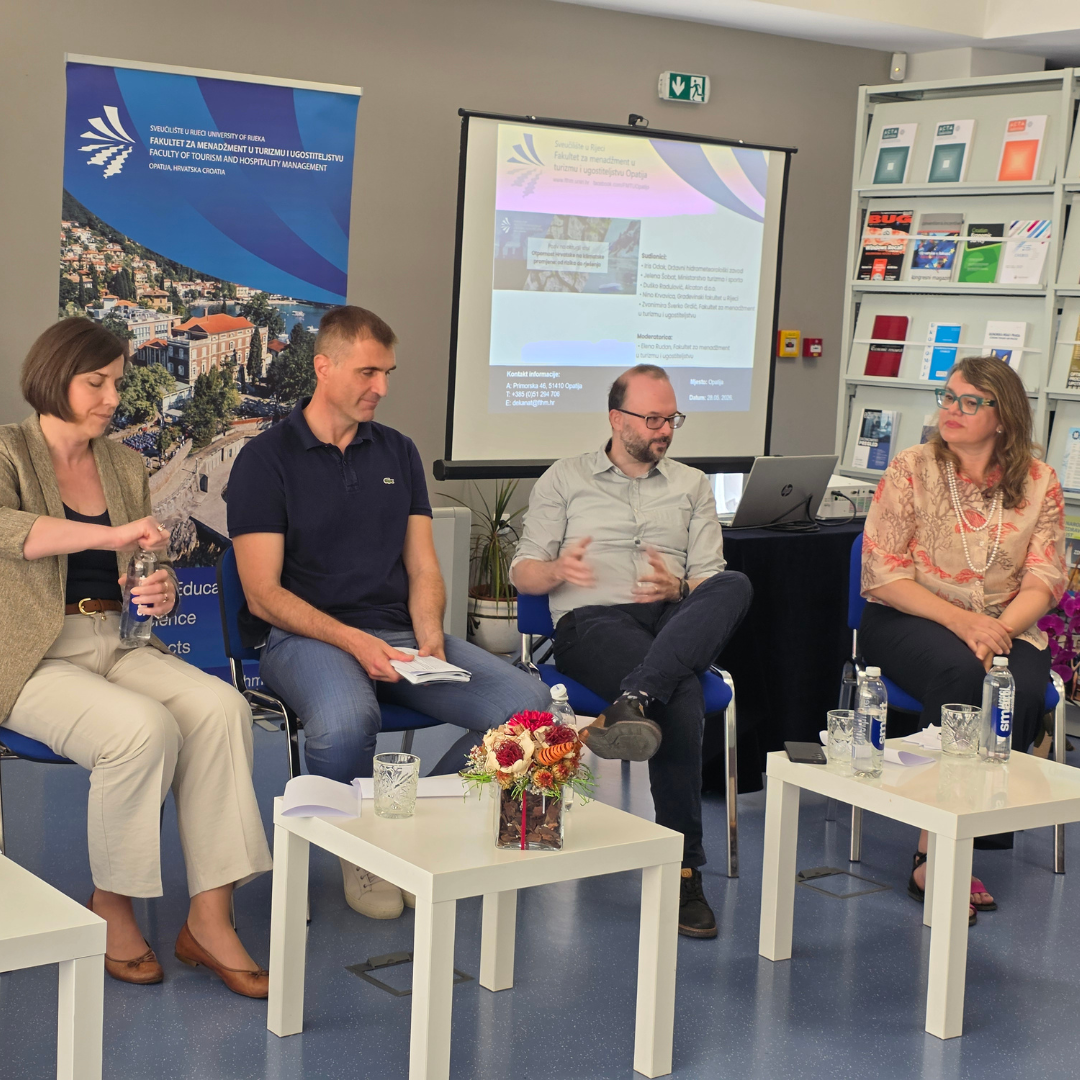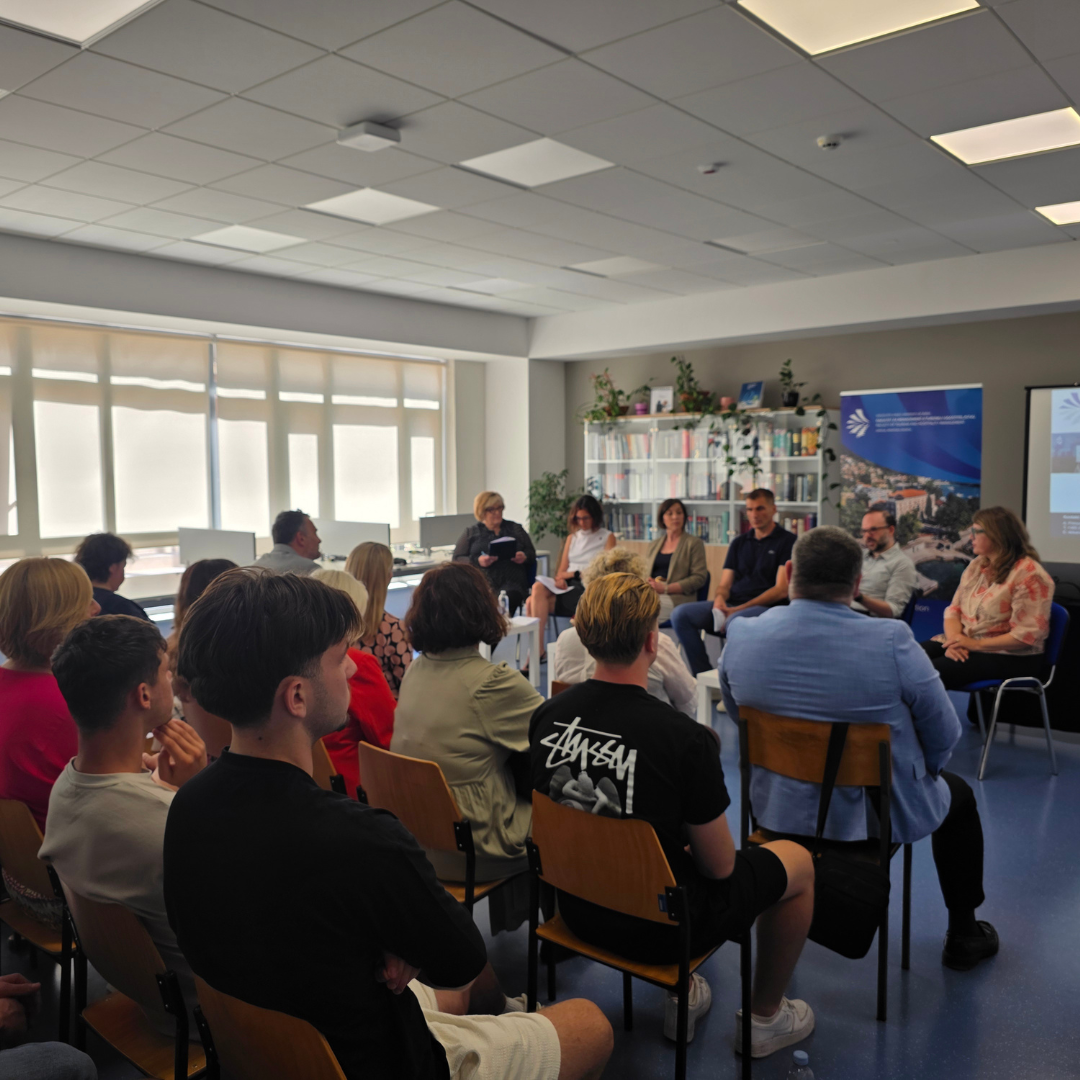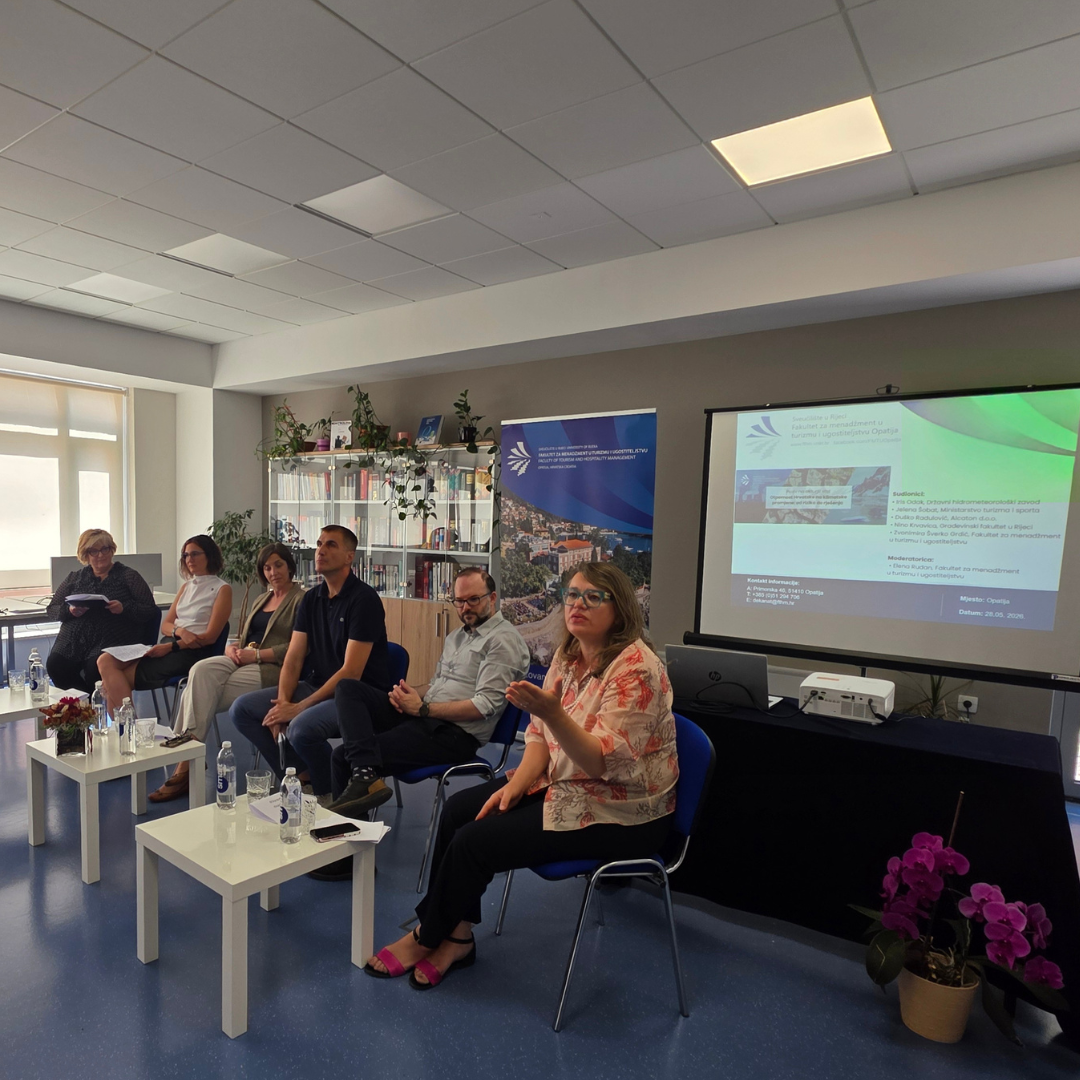
A round table entitled “Croatia’s Resilience to Climate Change: From Risks to Solutions” was held at the Faculty of Tourism and Hospitality Management in Opatija. The event was organised as part of the project “The Impact of Climate Change and Adaptation Measures in the Republic of Croatia” (KLIM-PRI), financed under the Competitiveness and Cohesion Programme 2021–2027.
The round table brought together experts from the public, academic and business sectors, while the discussion focused on identifying climate risks, strengthening the resilience of communities and tourist destinations, and linking scientific knowledge with public policies and concrete adaptation measures.
The discussion featured Iris Odak, PhD, from the Croatian Meteorological and Hydrological Service, Jelena Šobat from the Ministry of Tourism and Sport, Duško Radulović, PhD, from Alcaton d.o.o., Associate Professor Nino Krvavica, PhD, from the Faculty of Civil Engineering in Rijeka, and Professor Zvonimira Šverko Grdić, PhD, from the Faculty of Tourism and Hospitality Management. The round table was moderated by Professor Elena Rudan, PhD, from the Faculty of Tourism and Hospitality Management.
The participants concluded that climate change is having an increasingly strong impact on quality of life, community safety, water resources, spatial planning, the economy and tourism. It was particularly emphasised that adaptation to climate change requires timely planning, high-quality data, interdisciplinary cooperation and the implementation of measures at the national, regional and local levels.
“I believe that the problem of climate change can only be addressed through an interdisciplinary approach. We must broaden awareness, knowledge and competences, especially among young people, because they will be the future creators of the development of society and tourism,” said Professor Zvonimira Šverko Grdić, PhD, Vice Dean for Scientific and Professional Activities at FMTU.
One of the key conclusions of the round table was that scientific results must be transferred into practice more effectively, particularly in spatial planning, development strategies and adaptation measures. It was emphasised that climate risks must not remain merely the subject of analysis, but should serve as the basis for decision-making that will increase the long-term resilience of areas, infrastructure and local communities.
Special attention was given to tourism as a sector that is highly sensitive to climate change, but which at the same time plays an important role in shaping more sustainable development models. It was concluded that tourist destinations which identify risks in a timely manner, monitor climate indicators and invest in adaptation can preserve the quality of the tourism product, protect natural resources and strengthen the resilience of local communities.
The event was organised as part of the KLIM-PRI project, led by the Faculty of Tourism and Hospitality Management, with the Faculty of Civil Engineering in Rijeka, the City of Pula and the City of Rijeka as project partners. The project also involves the Pula Tourist Board, the Rijeka Tourist Board and the Teaching Institute of Public Health of Primorje-Gorski Kotar County as collaborators.
The round table confirmed the importance of an intersectoral approach to addressing climate change, as well as the need for systematic cooperation between scientific institutions, public administration, local and regional stakeholders and the business sector. Such an approach is essential for the timely identification of climate risks and the development of measures that contribute to quality of life, resource protection and sustainable development.