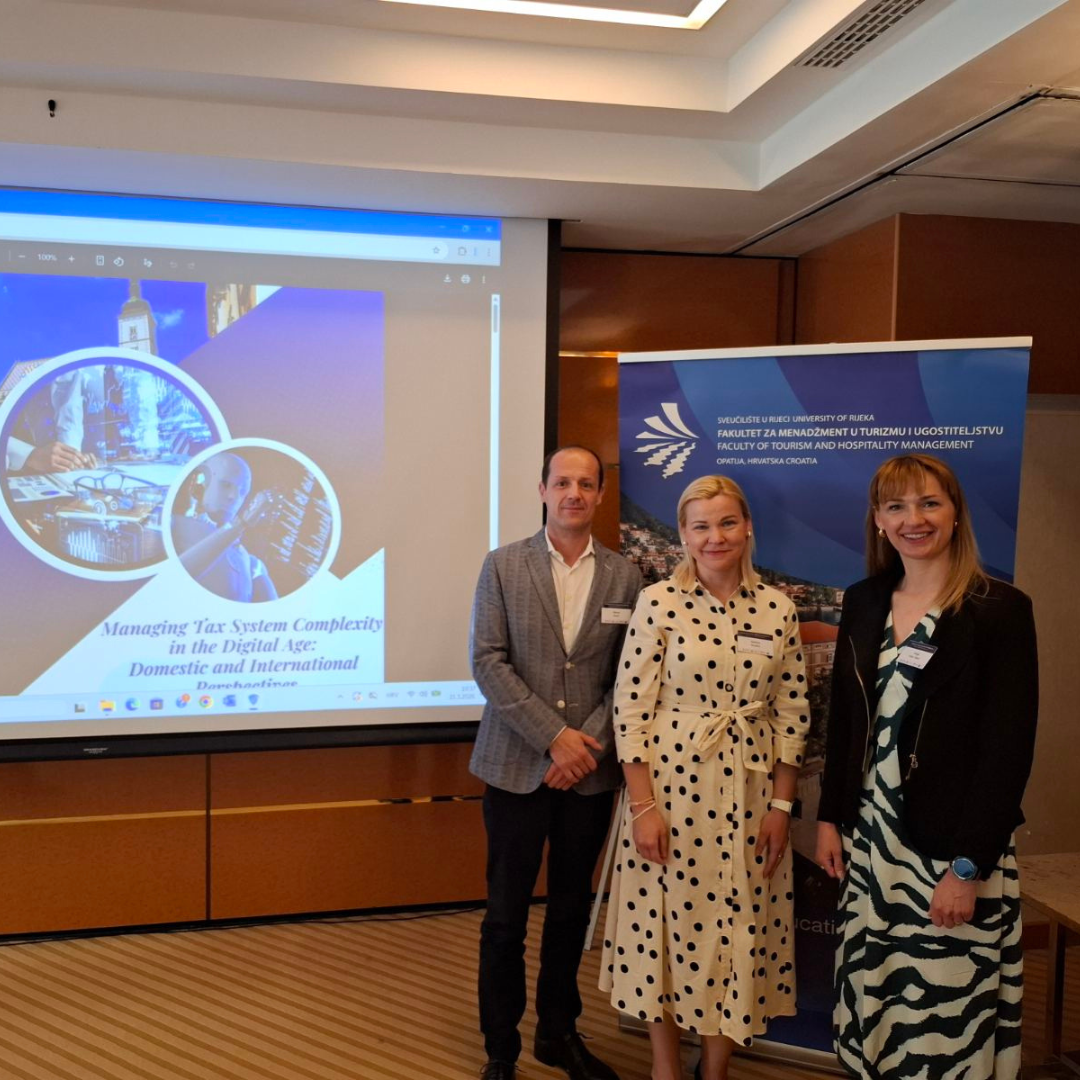
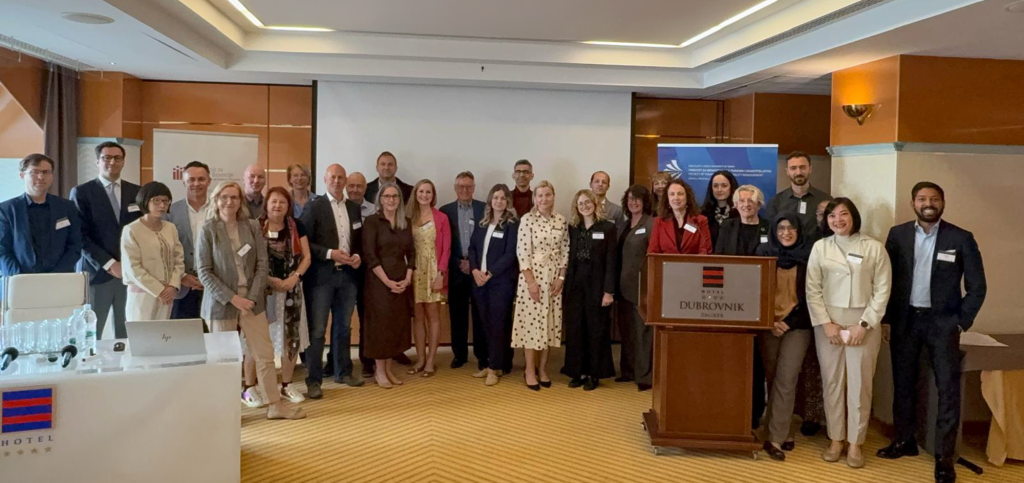
An international scientific conference titled “Managing Tax System Complexity in the Digital Age: Domestic and International Perspectives” was held in Zagreb on 21 and 22 May 2026. The conference was dedicated to one of the key issues of contemporary public policy: how to effectively manage the complexity of tax systems in the context of increasingly intensive digital transformation.
The conference was jointly organized by the University of New South Wales (Australia), Queensland University of Technology (Australia), the Institute of Public Finance (Zagreb), and the Faculty of Tourism and Hospitality Management, University of Rijeka. As one of the academic partners of the event, FMTU participated in an international discussion connecting tax policy, digitalization, public finance, regulatory challenges, and the social effects of contemporary tax solutions.
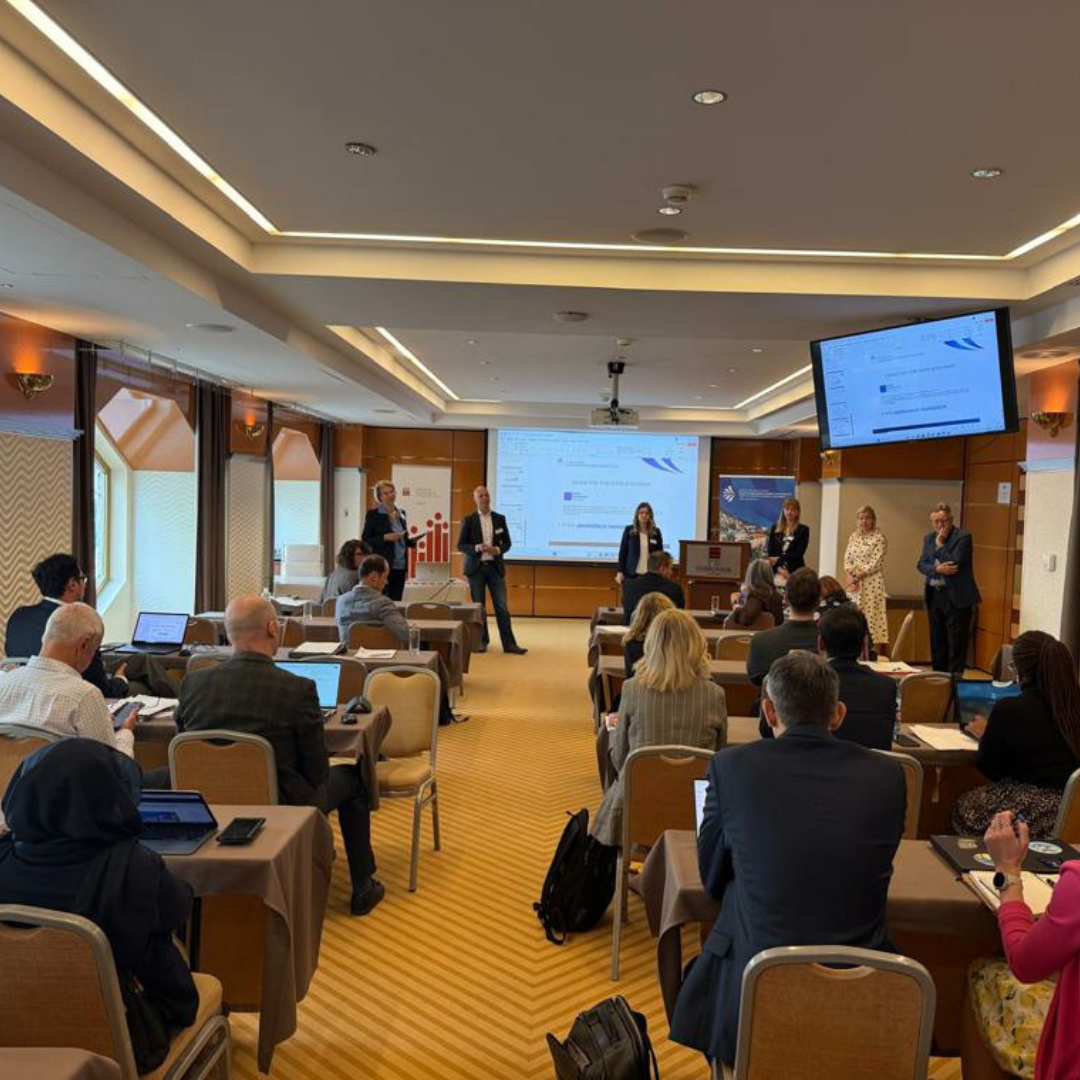
During the two-day programme, domestic and international researchers and experts examined various aspects of tax complexity, ranging from administrative burdens and system fairness to the role of digital tools in tax administration. Particular emphasis was placed on the question of whether digitalization can truly contribute to simplifying procedures for taxpayers and institutions, or whether, under certain circumstances, it creates new forms of legal, technical, and organizational complexity.
The conference was opened by Prof. Sabina Hodžić, PhD, from the Faculty of Tourism and Hospitality Management. In her opening address, she emphasized the importance of scientific dialogue and international cooperation in a period of rapid technological change, particularly when research findings are linked to the needs of public institutions, the economy, and society as a whole.
The discussions also addressed the protection of taxpayers’ rights in the digital environment, the application of artificial intelligence in tax administrations, the international exchange of experiences, and the need for carefully designed reforms that do not increase system complexity under the guise of simplification. Participants emphasized that digital solutions can serve as an important instrument for more effective governance, but only if they are accompanied by a clear legal framework, institutional coordination, and an understanding of the real needs of system users.
As part of the session “Simplification: The Bigger Picture”, our colleagues Prof. Sabina Hodžić, PhD, and Assist. Prof. Tanja Fatur Šikić, PhD, presented the scientific paper titled “E-government Services and Fiscalization as Tools to Enhance Tax Compliance in Croatia”, which forms part of the research project UNIRI NPOO – uniri-iz-25-250, under the acronym EGOVGREEN, funded by the European programme NextGeneration EU.
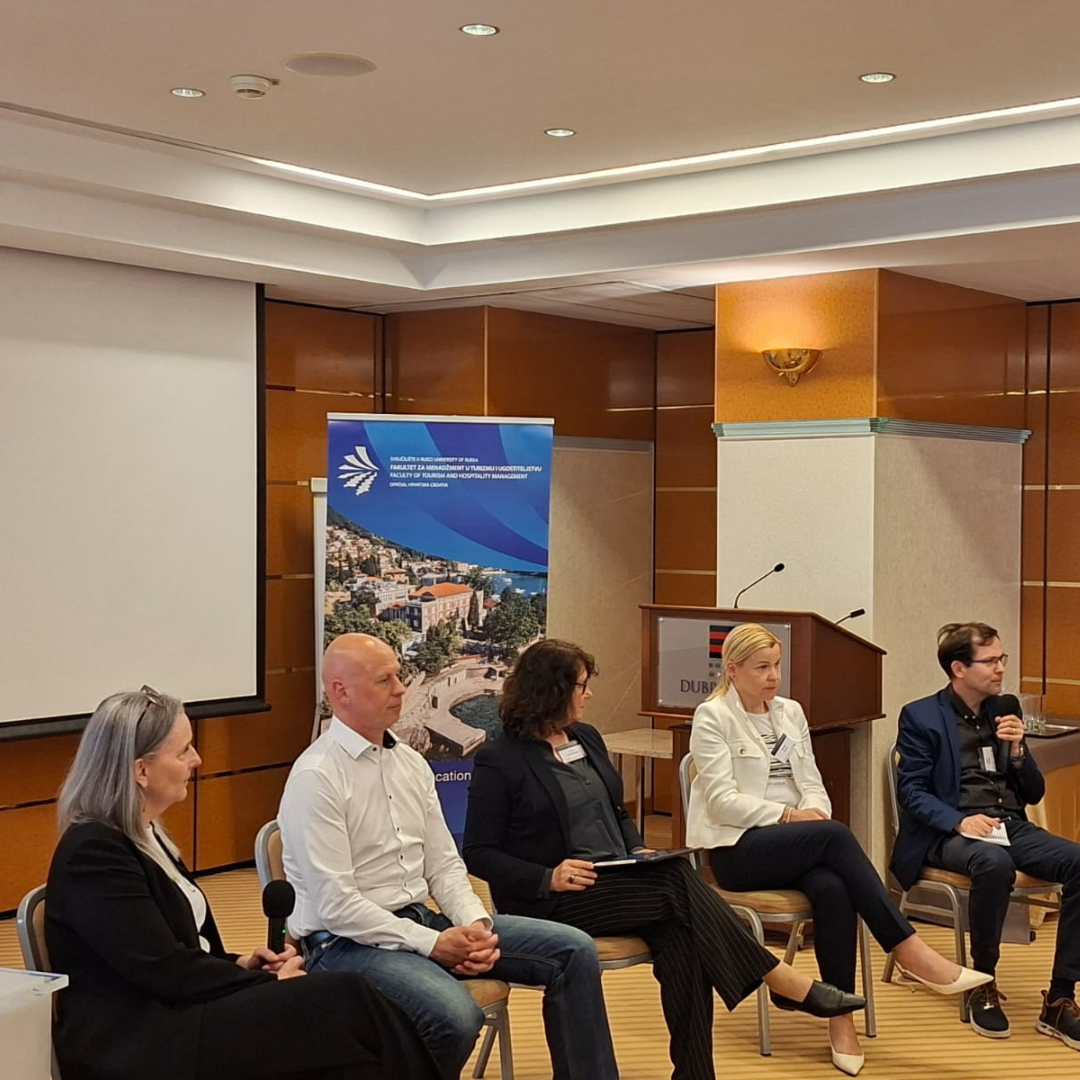
The final panel discussion, in which our colleague Prof. Sabina Hodžić, PhD, also participated, focused on the key conclusions and future directions for the development of tax systems in the digital age. The discussion highlighted that tax complexity cannot be viewed solely as a technical issue, but rather as a broader public policy challenge involving citizens’ trust, institutional efficiency, compliance costs, and international cooperation.
By participating in the organization of the conference, FMTU continues to contribute to academic and professional discussions that go beyond narrow sectoral areas and address issues relevant to tax policy, public governance, economic development, and digital transformation. Events such as this confirm the importance of connecting research, international cooperation, and socially relevant topics within the academic sphere.
More information about the conference, including the programme and the book of abstracts, is available on the official conference website.